Key takeaways
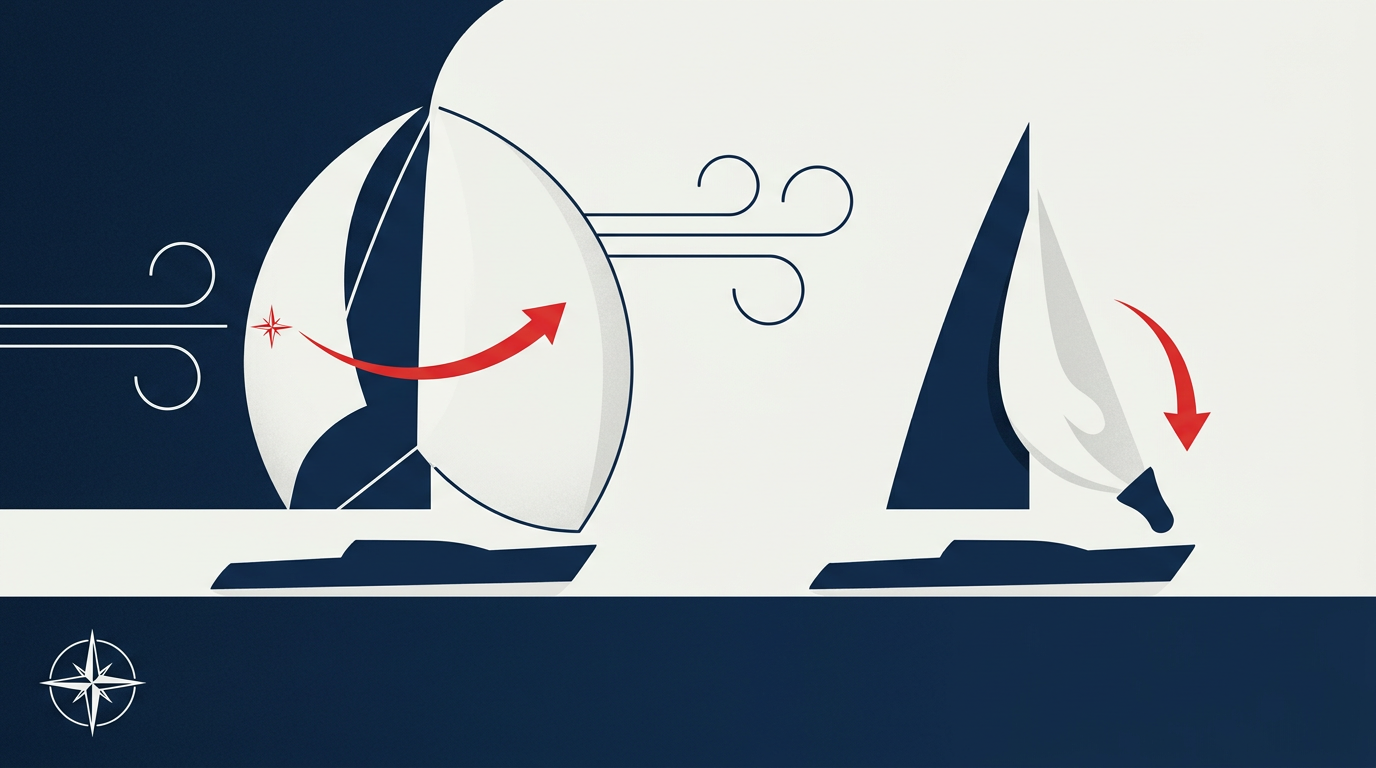
- Always pull the tack line out before hoisting the halyard to prevent the sail from filling too early.
- The helmsman must bear away to a deep broad reach during sets and douses to hide the spinnaker behind the mainsail.
- Execute douses in the order: Release Sheet, Release Tack, then Lower Halyard at a controlled speed.
- Never let the halyard drop faster than the crew can pull the sail into the boat to avoid 'shrimping' in the water.
The Art of the Asymmetric
Transitioning from a traditional symmetrical kite to an asymmetric spinnaker is one of the most rewarding upgrades for a modern sailor. Whether you’re racing a J/70 on Lake Winnebago or handling a cruising boat on Lake Michigan, the asymmetric is built for speed and simplicity. However, "simplicity" only works if your mechanics are sound. A botched set leads to an hour of untangling lines, and a bad douse can end with a "shrimp" under the bow.
Over my years coaching in Wisconsin, I’ve seen the same three mistakes happen repeatedly. We’re going to break down how to execute these transitions so you can focus on tactics instead of firefighting.
The Pre-Set Checklist
A clean set starts five minutes before you round the windward mark. The biggest mistake is rushing the hook-up. Before you reach the offset mark, ensure your lines are clear. The halyard should be led outside the forestay (if you’re setting from the bow), the tack line must be clear of the anchor or pulpit, and the sheets need to be led correctly around the outside of the forestay for an outside gybe.
One trick I teach my students: always pull a few feet of the tack line out before the hoist. If the tack is pinned to the bow during the hoist, the sail will fill prematurely and become a heavy, wind-filled bag that is nearly impossible to pull to the top of the mast.
The Hoist: Getting it Up and Filling
When you’re ready to set, the order of operations is critical. First, pull the tack line out to the end of the bowsprit. Do this while the sail is still in the bag or the companionway. Once the tack is out, the "pit" person should hoist the halyard as fast as possible.
The helmsman plays a huge role here. To keep the sail from filling and dragging the boat sideways during the hoist, the helm should bear away to a deep broad reach. This hides the spinnaker behind the mainsail, creating a dead air zone that allows the sail to travel up the mast smoothly. Once the sail is at the top, the trimmer pulls in the sheet, and the helmsman brings the bow up to the desired sailing angle.
The Douse: A Controlled Collapse
The douse is where most of the drama happens. In a recent Wednesday night race on Lake Mendota, I watched a boat lose three positions because they dropped the halyard before the sail was under control. The kite ended up in the water, acting as a massive sea anchor.
To avoid this, follow the "Sheet-Tack-Halyard" sequence.
- The Deep Angle: Just like the hoist, the helm must bear away to a deep downwind angle (about 150-160 degrees) to blanket the kite behind the main.
- The Release: The trimmer lets the sheet go completely. The forward crew grabs the lazy sheet (the one not under load) and starts pulling the foot of the sail into the companionway or the front hatch.
- Tack and Halyard: Once the crew has a solid grip on the sail, release the tack line. This causes the sail to collapse completely. Only then should the halyard be lowered. The pit person must lower the halyard at the same speed the crew is pulling the sail into the boat. If you drop it too fast, it goes in the water. Too slow, and the crew is fighting the mast.
Safety and Rules to Remember
When handling these maneuvers, remember World Sailing's Racing Rules of Sailing (RRS). Under Rule 11 (On the Same Tack, Overlapped), if you are the windward boat during a set or douse, you must keep clear of the leeward boat. Don't get so distracted by a messy hoist that you drift down onto a competitor.
Also, keep your hands clear of the blocks. A filling spinnaker generates immense load instantly. Always wear gloves, and never wrap a line around your hand. If a hoist goes wrong and the sail starts to drag the boat over, your first priority is the safety of the crew—blow the halyard and regroup.
Practice Makes Perfect
The next time you’re out on the water, don't just sail in circles. Set a buoy and practice five sets and five douses in a row. Focus on the timing between the helm, the pit, and the bow. When the coordination clicks, your transitions will be silent, fast, and—most importantly—dry.
Written by Dmitry Shteyn — Wisconsin sailor and educator. Find more sailing notes on the daily blog or read the longer guides.