Key takeaways
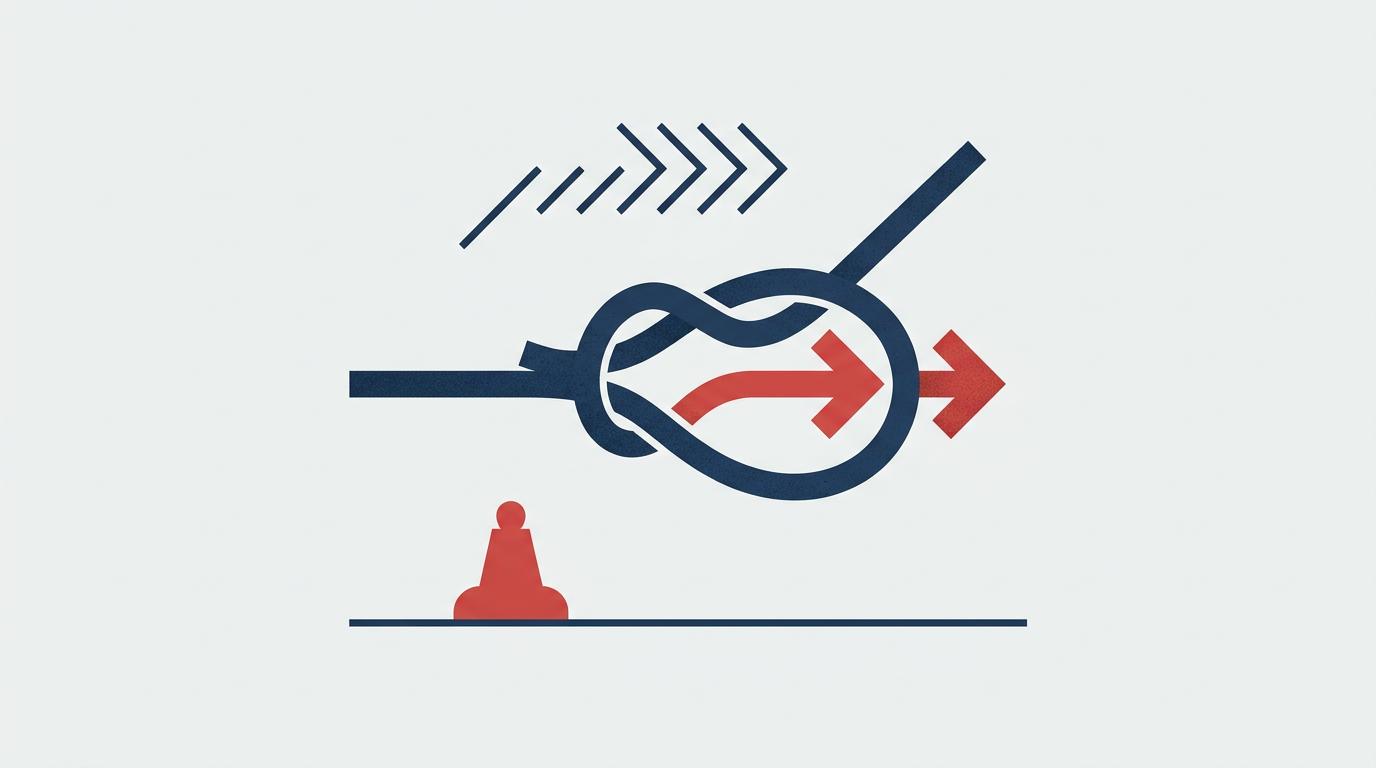
- Use a bowline for jib sheets and halyards because it won't slip but remains easy to untie after heavy loading.
- Always put a figure-eight knot at the end of sheets to prevent them from escaping through blocks during a maneuver.
- Limit clove hitches to temporary tasks like hanging fenders, as they can slip under intermittent tension.
- Ensure your cleat hitch includes the final locking tuck to prevent dock lines from vibrating loose in wind.
The Right Tool for the Job
I often see students at the Milwaukee Yacht Club struggle not because they can’t tie a knot, but because they’ve picked the wrong one for the situation. In sailing, a knot is a tool. Just as you wouldn’t use a screwdriver to drive a nail, you shouldn't use a bowline where a hitch is required. On a moving boat, the wrong knot can lead to jammed blocks, lost halyards, or—in the worst-case scenario—a boat drifting away from the pier.
Today, I want to break down the specific applications for the four most critical knots we use in our local Wisconsin fleets, from the heavy PHRF boats on Lake Michigan to the quick X-Boats on Lake Pewaukee.
The Bowline: The King of Loops
The bowline is perhaps the most famous knot in sailing, and for good reason. Its primary characteristic is that it does not slip under load, yet it remains easy to untie even after being heavily strained.
On my boat, the bowline belongs in two main places: the jib sheets and the halyards (if they aren't using shackles). When you are beating upwind into a 20-knot Northeaster on Lake Michigan, those jib sheets are under immense tension. A lesser knot would weld itself shut. The bowline stays secure, but once we’re back at the dock, a simple crack of the "bird’s neck" releases the tension instantly.
Safety Note: Never use a bowline on high-modulus lines like Dyneema without extra tucks; it can slip. For standard double-braid polyester, it is your best friend.
The Figure-Eight: The Stopper
If the bowline is for attachment, the Figure-Eight is for containment. This is a "stopper knot." Its sole purpose is to prevent a line from running through a fairlead, a block, or a clutch.
I’ve seen many new sailors try to use an overhand knot for this. The problem? An overhand knot under load becomes a tiny, hard marble that is nearly impossible to pick apart with your fingernails. The Figure-Eight is bulkier and much easier to undo.
In a race, I always make sure there is a Figure-Eight at the end of the mainsheet and the jib sheets. If you lose your grip during a heavy air tack, that knot is the only thing preventing the sheet from whipping out of the blocks and leaving you powerless. It’s a fundamental safety habit.
The Clove Hitch: Temporary Security
The clove hitch is a quick way to secure a line to a spar or a rail. However, it’s important to understand its limitations: it is a temporary knot. If the tension on the line is constant, it holds well. If the tension is intermittent (slack-load-slack), the knot can work itself loose.
I primarily use the clove hitch for hanging fenders. When we are coming into the slip at McKinley Marina, I can quickly adjust the height of the fenders with a clove hitch on the lifelines. It’s fast and adjustable. However, I would never use a clove hitch to tie my boat to a piling overnight. For that, you want something more permanent like a round turn and two half-hitches.
The Cleat Hitch: Dockside Fundamentals
It sounds simple, but the cleat hitch is where many expensive mistakes happen. A proper cleat hitch involves a full turn around the base, a cross over the horns (making a figure-eight), and a final tuck where the tail is parallel to the previous wrap.
Last summer, during a heavy thunderstorm on Lake Winnebago, I saw a visiting boat nearly go adrift because the sailor had simply wrapped the line around the cleat a dozen times without the locking tuck. Friction is not a substitute for a proper hitch. The locking tuck ensures that the more the boat pulls, the tighter the knot holds the tail against the cleat.
Matching the Knot to the Load
When choosing a knot, ask yourself two questions:
- Does this line need to come off quickly under load?
- Is the load constant or surging?
For example, if you are towing a dinghy, a bowline is great for the bow eye, but a round turn and two half-hitches is better for the towing post because it handles the surging of the waves without vibrating loose.
Learning the mechanics of these knots makes you a more versatile sailor. It’s not about how many knots you know, but how perfectly you apply the few that matter. Keep your lines tidy, melt your ends to prevent fraying, and always check your partner's work before you leave the dock.
Written by Dmitry Shteyn — Wisconsin sailor and educator. Find more sailing notes on the daily blog or read the longer guides.